


Franchise growth lives or dies on marketing. Franchisors face a real strategic fork, though. Should lead gen live at corporate, where it’s easier to control, or should it live at the local level? Franchisees do know their market best, right?
It’s a difficult decision to face. Both models have real strengths. The businesses really winning right now are usually running some version of both. Today, we’re going to explore the tradeoffs, what our own survey findings reveal about consumer responses, and how to figure out which approach fits into your system.
Centralized marketing means corporate owns the strategy, the budget, and the execution. One team builds the campaigns, sets the messaging, and distributes leads down to individual locations. This is common with national paid search, broad social campaigns, and brand-level SEO.
The appeal is obvious: consistency. Every location gets the same quality of creative, the same brand voice, and the same reporting structure. Corporate can negotiate better ad rates at scale, and franchisees don't need to have any marketing expertise of their own. They just focus on operations. It also simplifies compliance. Legal and brand teams only need to review one set of campaigns instead of dozens or hundreds of variations running across different markets.
The downside is that centralized campaigns tend to speak in generalities. They have to, since they're built to work across every location at once. That means the copy can't reference the specific neighborhood, the local competitor down the street, or the community event happening this weekend. It's built for scale, not specificity, and specificity is exactly what tends to move people.
Local marketing flips that. Individual franchisees run their own campaigns, often targeting their specific city, neighborhood, or service area. This might mean local SEO, Google Business Profile management, local paid ads, or community sponsorships.
The big pro here is that franchisees know their market. They know which neighborhoods convert, which events matter, and what language actually resonates with the people down the street from them. That local knowledge is hard for a corporate team three states away to replicate, no matter how good their research is.
And the data backs up why this matters. We ran a survey on how consumers respond to localized ads.
Nearly 9 out of 10 people say they're more likely to pay attention to an ad when it mentions their specific city or neighborhood.

That's not a small edge. When a franchisee's ad feels like it's speaking directly to their town instead of a generic national campaign, it gets noticed first, and getting noticed is step one of the entire funnel. A perfectly targeted, well-budgeted campaign does nothing if it gets scrolled past.
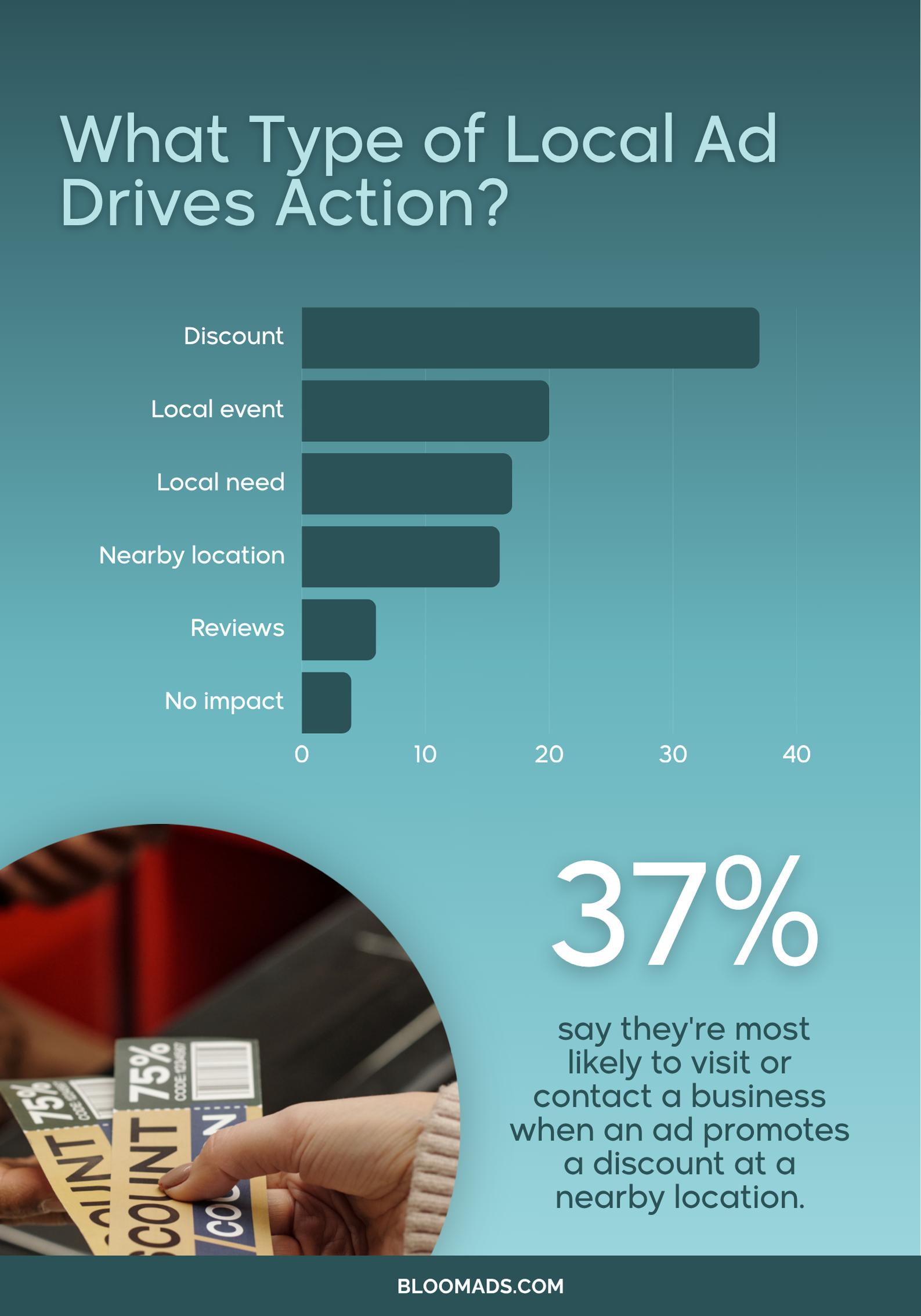
Attention is one thing but action is another. That’s what we really want. When people were asked what type of local ad actually gets them to visit or contact a business, the answers were specific: discounts, local events, addressing a local need, and mentioning a nearby location topped the list.
And when it comes to what makes an ad feel local in the first place, respondents pointed to concrete details: their city or neighborhood, a nearby business, or a familiar landmark.

This is where centralized campaigns tend to fall short. A national team can write great ad copy, but they can't reference the diner on Main Street or the community 5K happening next weekend. Franchisees can, and this is exactly the kind of detail that separates an ad someone skims past from one that actually gets a phone call or a walk-in.
This matters for lead quality specifically, not just lead volume. A centralized campaign might generate more total leads simply because of bigger budgets and broader reach, but volume alone doesn't tell franchisors much if a large share of those leads never convert. Franchisors evaluating their lead gen strategy should be looking past cost per lead and tracking cost per qualified lead, or better yet, cost per closed customer, broken out by campaign source. That's the number that actually tells you whether centralized or local campaigns are pulling their weight.
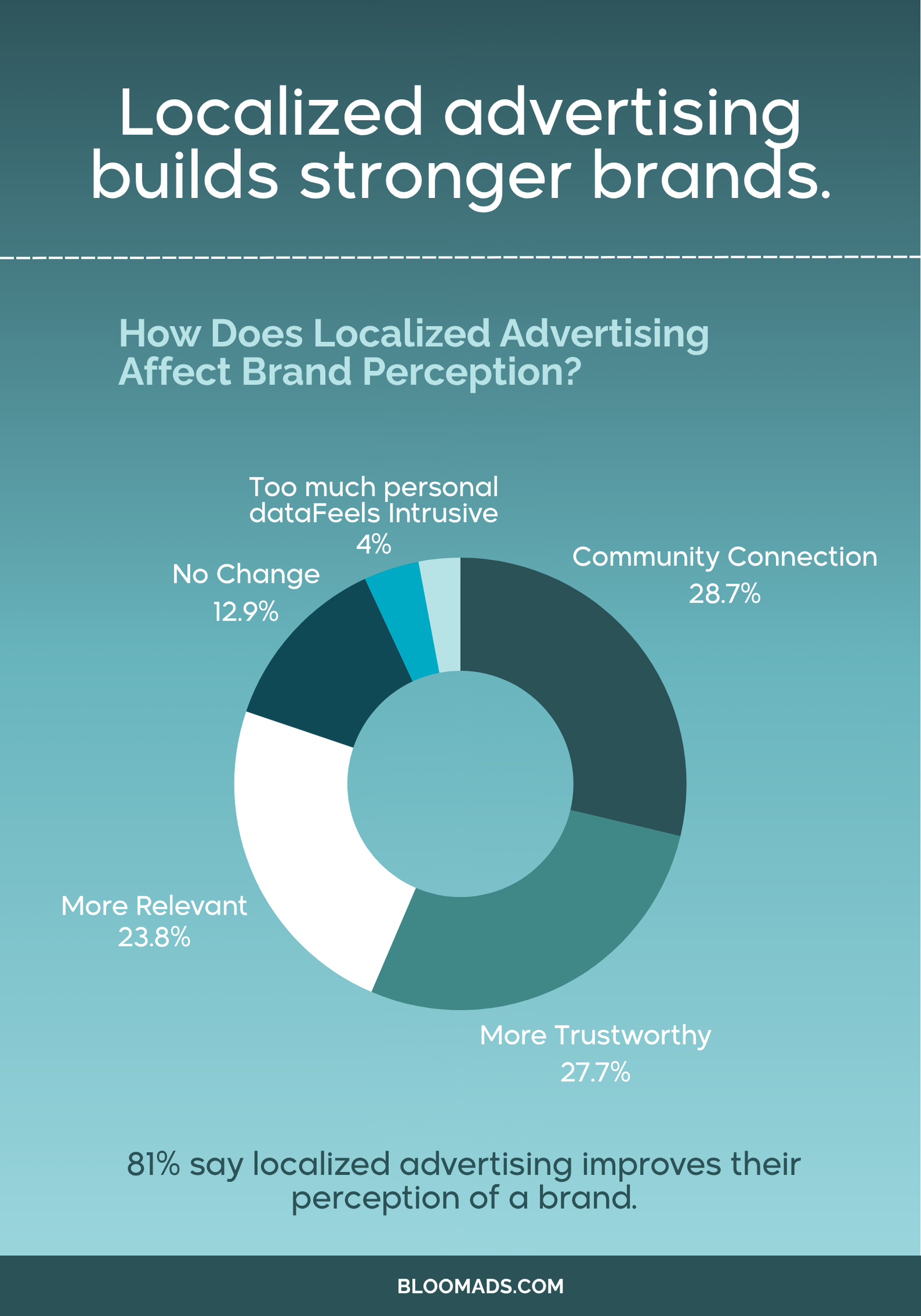
There's also a brand perception angle that franchisors sometimes overlook. Localized advertising doesn't just perform better, it changes how people feel about the brand. The vast majority of respondents (81%) said localized advertising improves their overall perception of a brand, citing stronger community connection and increased trust.
For franchisees, that's a meaningful stake in the ground. When their local campaigns build trust in their specific community, it reinforces their investment in the brand and gives them a direct hand in their own success, rather than feeling like a passive recipient of corporate leads.
This has real implications for franchisee relationships too. Franchisees who feel like their local market expertise is being used, not overridden, tend to be more engaged with the brand overall. That's worth factoring into any centralized-versus-local decision, since franchisee satisfaction affects retention, compliance, and how much effort franchisees put into their own locations beyond just marketing.
Local isn't automatically better, though. It comes with real risk if it's executed poorly. When people were asked about their biggest concerns with local ads, the top answers were that the advertised offer wasn't actually available nearby, followed closely by ads that simply felt inauthentic.

This is the exact failure mode franchisors worry about when they hand marketing control to individual locations: inconsistent quality, inaccurate claims, or campaigns that feel slapped together. Without any oversight, franchisee-driven lead gen can undercut the very trust it's supposed to build. A franchisee running an outdated promotion, using off-brand messaging, or advertising an offer that isn't actually valid at their location does damage that's hard to walk back, both for that location and for the brand as a whole.
This is the strongest argument against a fully decentralized model. Local relevance only helps if it's accurate and on-brand. The moment it isn't, it actively works against the franchise.
This is why most successful franchise systems land somewhere in the middle. Corporate builds the infrastructure: brand guidelines, approved messaging frameworks, budget support, and campaign templates. Franchisees then localize within that framework, swapping in their neighborhood, their events, and their specific offers.
In practice, this often looks like corporate providing a library of pre-approved creative and copy blocks, with clearly marked fields for franchisees to fill in local details: their city, a nearby landmark, a current local promotion, or an upcoming community event. Franchisees get the flexibility to make the ad feel genuinely theirs, without the risk of off-brand messaging or factual errors making it into the market.
It could also involve more franchisor creativity. Corporate can handle paid ads while franchisees run localized social media pages.
A few questions worth asking before committing to a model:
There's no universal right answer here. But the data is clear that people respond to ads that feel genuinely local, and franchise systems that figure out how to deliver that, whether through local teams, hybrid support, or smart local media buying, are the ones that will win on lead quality over time.
At Bloom Ads, we help franchise systems build marketing strategies that balance corporate consistency with local relevance. Reach out to learn about how we can help you with all your franchise marketing needs.