
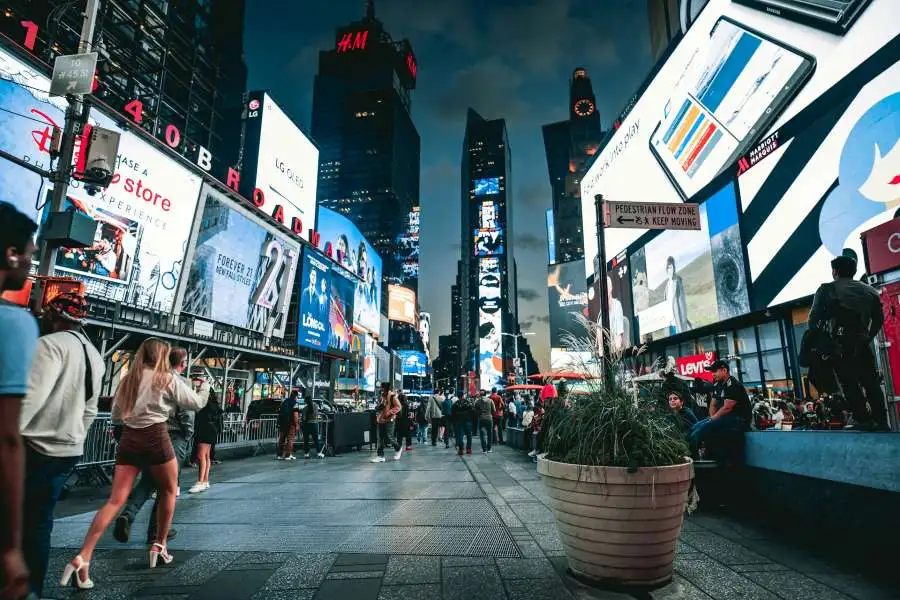
When you think about your business’s marketing, your mind probably jumps to social media ads, targeted emails, or maybe an old-school print ad. But there's a different kind of advertising that is making a huge comeback and turning a lot of heads: LED billboard advertising.
LED billboards aren't like traditional static billboards. They're large, vibrant, high-definition screens. Today, many businesses are considering mobile billboards on the back of a car or truck, driving right through the heart of your target market. It's a bold move, but for the right business, it can be incredibly effective.
However, before you sign a contract, it's crucial to understand the whole picture. LED mobile billboards aren't a silver bullet for every marketing challenge. So let's talk about the pros and cons, as well as everything in between, so you can make a smart, informed decision about whether mobile LED billboard advertising is right for your brand.
LED mobile billboards are digital screens mounted on trucks, trailers, buses, or even delivery vehicles, where they are used as a mobile canvas for advertising.
They offer dynamic visuals and flexibility that traditional billboards can’t match. Vehicles featuring these billboards are able to visit high-traffic areas and events, shopping districts, or neighborhoods where your target demographic are already hanging out.
According to recent data, these aren’t just flashing lights and pictures on a truck; they actually seem to work. One study found that approximately 90% of U.S. travelers notice mobile outdoor media. It's estimated that each of these moving advertisements can generate between 30,000 and 70,000 impressions a day.
The advantages of this type of advertising are pretty significant, and they can be game changers for a business looking to make an impression.
Traditional billboards are static. In other words, they only show a single ad, day after day. Your typical commuter may see this image daily, but its effectiveness has a tendency to diminish over time. After a while, many static billboards become invisible.
LED mobile billboards, on the other hand, are bright and eye-catching – even in busy, chaotic environments with crowds of people. And because they move, they're unexpected, which naturally draws more attention. They’re not just signs. They’re a moving visual feast for the consumer’s eyes.
This is probably the biggest selling point. A static billboard is stuck on the side of a highway. Since mobile billboards can go anywhere, you can choose the routes where your customers are.
You can have your ad drive through a busy downtown during the morning commute, park outside a convention center during a trade show, or circle a popular shopping district on a Saturday afternoon.
This allows you to place your message in front of a specific audience at the exact time and place where it will have the most impact. You can also tailor your routes to target specific neighborhoods, event venues, or even rival business locations.
The combination of movement, bright visuals, and unexpected placement makes mobile LED billboard advertising highly memorable and hard to ignore. They break through the white noise of traditional advertising.
A person stuck in traffic is a captive audience; they're going to see your ad for more than just a second, and that exposure helps your brand stick in their mind. Studies have shown that mobile billboards have a much higher recall rate than their static counterparts.
While the daily rate for an LED mobile billboard might seem high at first, the cost per impression is often very low. Because a single truck can reach tens of thousands of people in a single day, you’re getting an incredible amount of visibility for your investment.
Compared to a TV ad campaign or even a long-term static billboard lease in a prime location, a mobile billboard campaign can be a super-efficient use of your marketing budget.
Of course no marketing tool is perfect. Mobile LED billboard advertising has drawbacks, too, and may not be the right choice for your business in all circumstances. Some of the cons of mobile LED billboards include:
A mobile billboard is always on the move. Your audience, whether they're in their car or on a sidewalk, has a very limited window of opportunity to see your message.
This means your ad has to be simple, with a clear and concise message that can be absorbed within a few moments. This is not the medium for a complex sales pitch; your ads need to be an elevator pitch. If your ad creative isn't optimized for this medium, you'll be missing out.
The effectiveness of your campaign is dependent on the route you choose and any potential traffic conditions. If your truck gets stuck in an unexpected traffic jam, or if a planned route is rerouted, your exposure could be negatively impacted.
A solid advertising campaign requires careful planning and a little bit of good luck to get the most out of your mobile billboard.
Some mobile billboards come with their own generators or are run on loud engines. While this may not be a major issue in a noisy urban environment, it might be a concern in quieter residential areas. You should also be mindful of local ordinances regarding noise and vehicle operation.
Heavy rain, fog, or extreme weather can dull your ad's visibility. Additionally, some cities restrict or even ban mobile LED billboard advertising altogether due to safety or legal concerns.
While you can target specific geographic areas, you can't target a specific demographic in the same way you can with digital marketing. Your ad will be seen by everyone in that area, whether they’re a potential customer or not. This can lead to a lower conversion rate than a highly targeted digital ad, but it's a trade-off for the massive reach and brand awareness you gain.
While many kinds of businesses can see a benefit from LED mobile billboard advertising, some are a natural fit for this medium.
Businesses with a physical location live and die on foot traffic. LED billboard advertising can drive right through a busy downtown area, showcase delicious food or a new product, and give a clear call to action to visit your location.
Concerts, festivals, and other events need to create buzz. A mobile LED billboard can drive through high traffic areas, play video clips, and display a countdown to the event, creating a heightened sense of excitement.
Mobile billboards offer a powerful way to get a candidate's message or a cause's CTA directly to a wide audience in a specific geographic area.
A mobile billboard can advertise a new housing development or a grand opening of an apartment complex, and you can drive the truck directly to the surrounding neighborhoods to attract local buyers.
While these businesses don't have a physical store, they can use a mobile billboard to drive traffic to their website. The ad can feature a QR code or a short, memorable URL that people can easily snap a picture of or search online.
The tech industry is known for bold marketing choices, while flash promotions are “in-your-face” and used to generate buzz. That's why LED mobile billboards can be perfect for conventions, pop-ups, and product drops.
If you decide to invest in mobile LED billboard advertising, a great ad can be the difference between a successful campaign and a flop. Here are some best practices to follow:
Define Clear Objectives: Know your goal. Is it brand awareness? More in-store visits? Are you trying to drive website traffic? Each of these requires different strategies and messaging, so determine your goal and shape your campaign accordingly.
Keep it Simple: Viewers should be able to understand your ad in five seconds or less. Use large, easy-to-read fonts and high contrast colors. Make your images bold and eye-catching, and keep ad copy under six words.
Focus on Powerful Visuals: The visual is the most important part of the ad. If you use one high-resolution image that immediately conveys your brand or product, people will see the image before they read the words.
Include a Clear CTA: Tell people what you want them to do. Your call to action should be direct and easy to follow.
Plan Your Routes Strategically: Don't just pick a random route. Analyze your target market and figure out where they work, live, and play. Drive your billboard where your customers are.
Leverage Technology: Many LED mobile billboards have the capability to display dynamic content. You can have different ads for different times of the day, or you can show live feeds from social media using a specific hashtag.
Test and Tweak: Make sure to A/B test different visuals or copy and track which performs better, and optimize your messaging. Experiment with different ad designs and make real-time changes if you have to.
LED mobile billboards offer a compelling mix of flexibility, visibility, and engagement, especially for businesses aiming to reach local audiences in impactful, mobile ways. And investing in them can be a smart move for the right business.
It's a powerful tool for building brand awareness, driving foot traffic, and making a bold statement. Just make sure you plan ahead: define what success looks like, design simply, pick your routes wisely, track rigorously, and adapt fast.
By understanding the pros, cons, and best practices, what might seem like a bold, out-there move could deliver clear, measurable results and a solid return on your investment.
Want to learn more about how LED billboard advertising can help your brand? Contact Bloom Ads today!