

For years, paid social strategy revolved around identifying the right audience and then serving ads to that group. Modern advertising platforms (and arguably, shrinking attention spans) have changed that equation.
AI-driven algorithms can increasingly use the creative itself, including its imagery, message, format, and the way users respond to it, to determine who may be interested. That makes ad creative more than just branding reinforcement. It’s a chance to better align your ad spend with the right audience.
The team here at Bloom Ads ran a survey with 150 respondents. These survey results show what actually gets consumers to stop, trust, and most importantly, click on social ads. Let’s get into it.
When marketers say “creative is the new targeting,” they mean that ad platforms are getting better at using the creative itself to help determine who should see it. The image, video, message, format, and even the problem an ad focuses on can all generate signals about the type of person most likely to respond.
A product demonstration might resonate with one audience, while a customer story, unusual visual, or problem-focused message connects with another. Instead of trying to manually define every possible audience segment, advertisers can give the platform a wider range of creative angles and let performance data help guide delivery.
That does not mean audience targeting is gone. It means creative now plays a much larger role in determining relevance. The more distinct and useful signals your ads provide, the more opportunities the algorithm has to connect the right message with the right person.
Before an ad can generate a click or conversion, it has to capture somebody’s attention.
In our survey, we discovered that 25% of respondents said a bold or unusual image was most likely to make them stop and look at a social media ad, making it the most popular response. Product demonstrations and unexpected visuals followed.
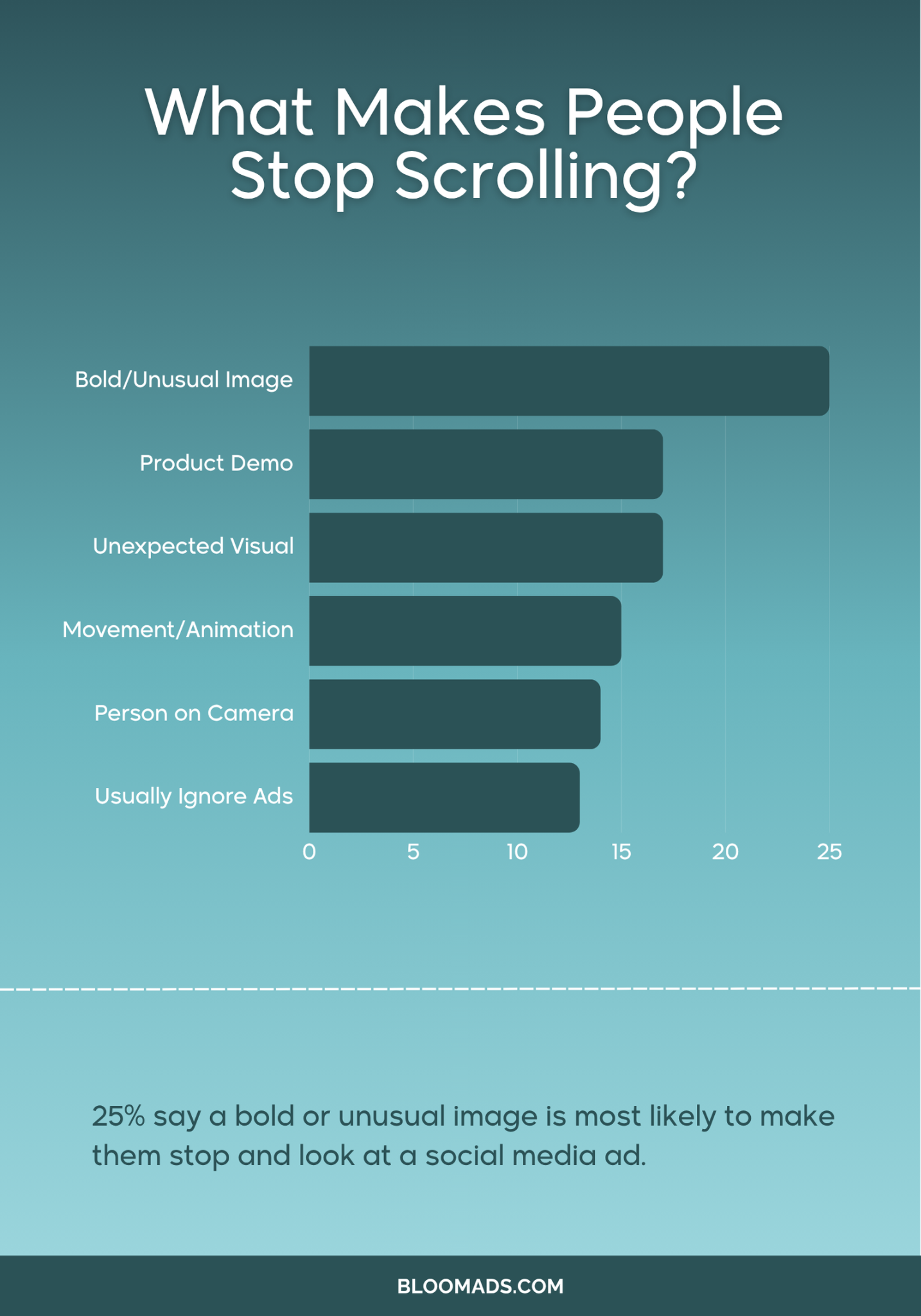
What does this mean? It means you need to stand out. Advertisers shouldn’t assume that polished or familiar-looking creative will automatically perform best. Strong visual hooks, unexpected concepts, motion, demonstrations, and other attention-grabbing elements give campaigns more ways to connect with users.
The goal is not to make every ad louder. It is to create enough meaningful visual variation to discover what different audiences respond to.
Getting attention is only the first step. Consumers also need a reason to trust what they are seeing.
Survey respondents showed a clear preference for more human creative. Especially in the age of AI, people are craving human connection and real content. AI-generated content really blends in with content that’s being spammed to social media.
Casual real-person videos ranked highest when respondents were asked what makes a social ad feel trustworthy, followed by product demonstrations and customer testimonials.
Polished brand advertising ranked considerably lower.
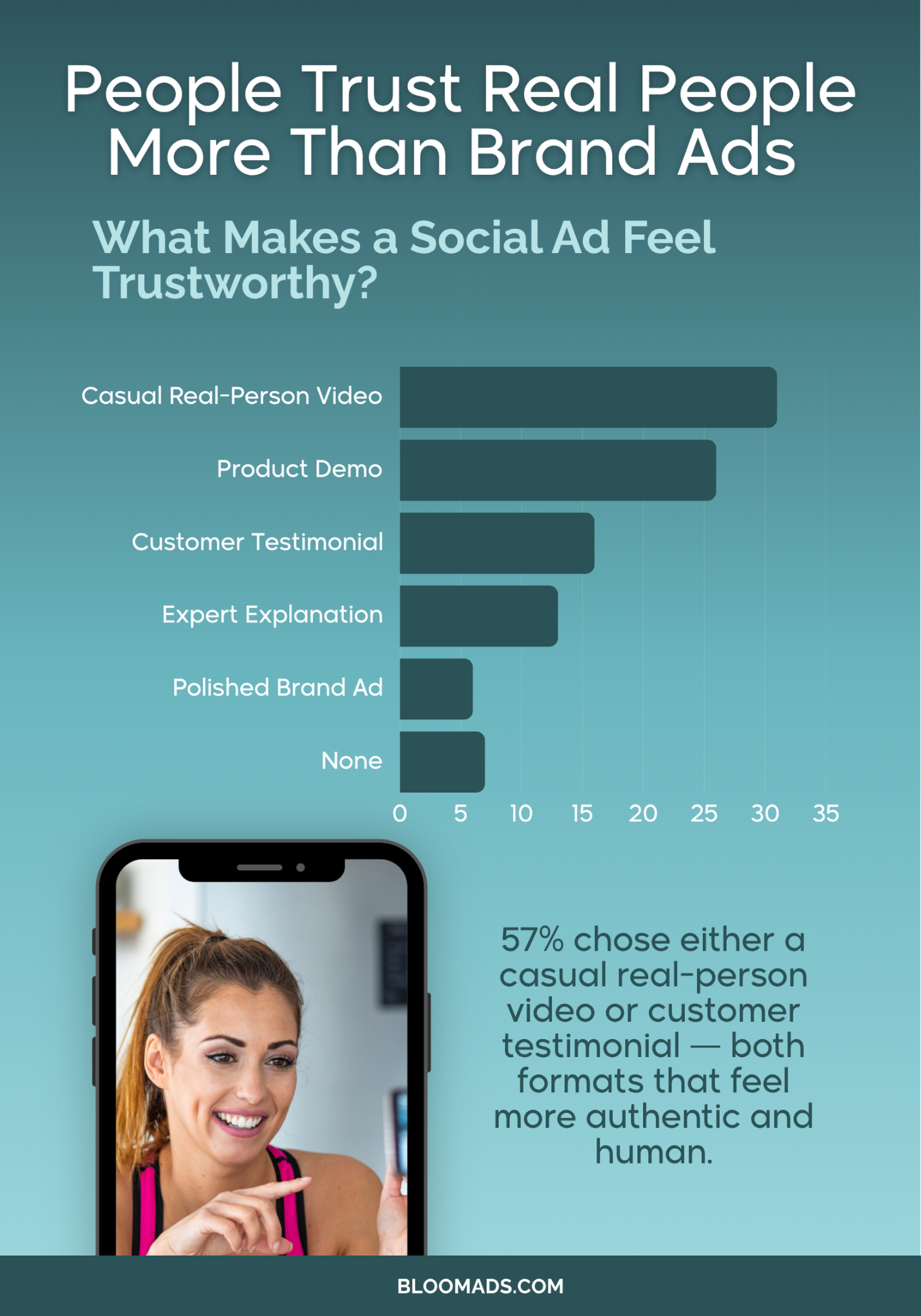
Highly produced brand creative still has a role, but it should not be the only creative available to an algorithm. Creator-style videos, customer perspectives, demonstrations, expert explanations, and traditional branded assets can all speak to different types of buyers.
This also gives the platform more signals about which style resonates with which audience.
Attention does not necessarily equal action.
When respondents were asked what makes them most likely to click an ad, 32% chose an ad that solves a problem they have, the largest response by a significant margin.
Clear benefits, discounts or offers, customer reviews, and product demonstrations followed.
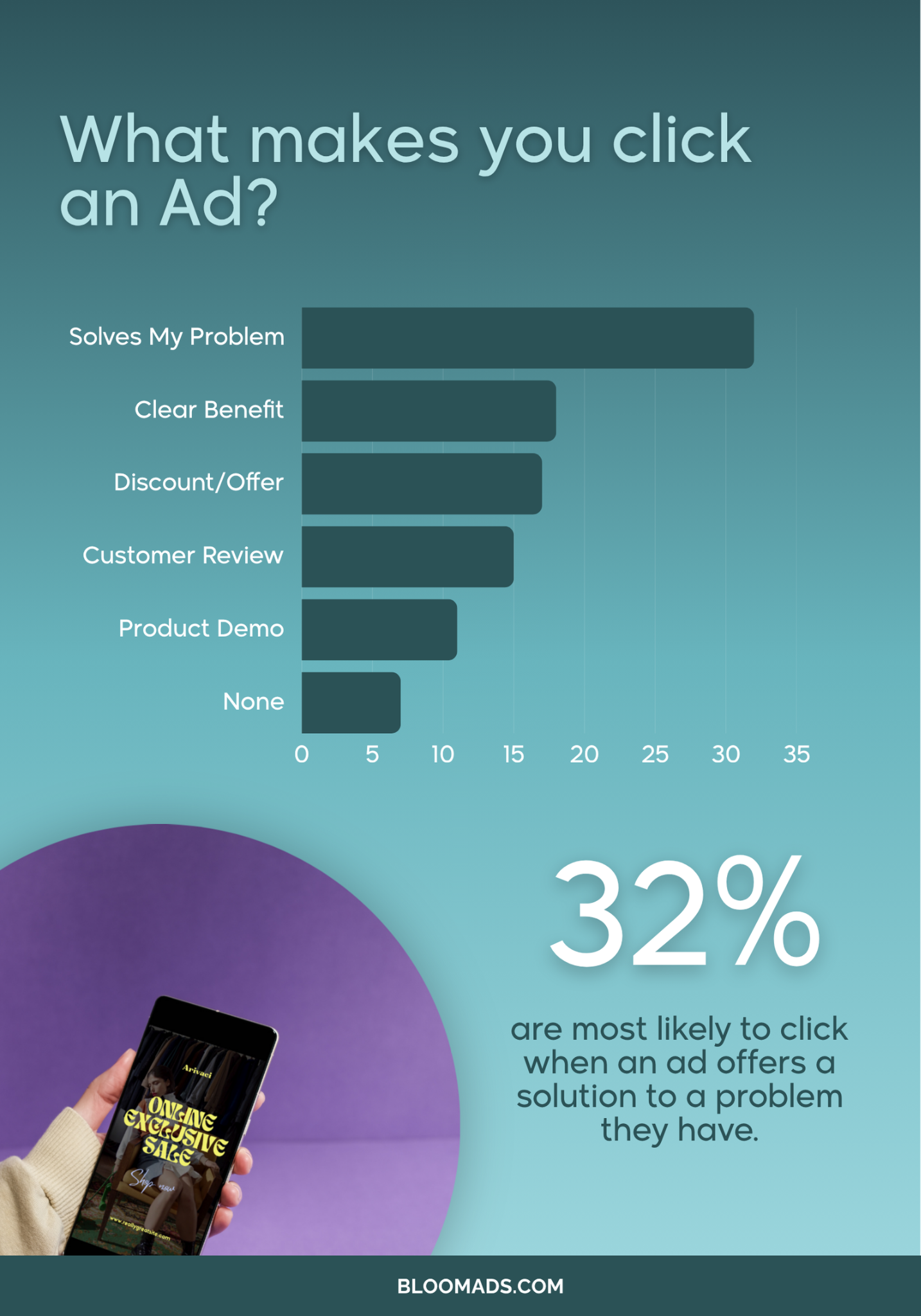
Brands should not simply create multiple versions of the same generic message. Different ads can focus on different customer problems, benefits, use cases, objections, motivations, or stages of the buying process.
One consumer may click because a product solves an immediate problem. Another may need social proof. Another may respond to a tangible benefit or offer.
That variety gives both the consumer and the algorithm more to work with.
Repetition can help build familiarity, but there is a limit.
When respondents were asked how they react to seeing the same ad repeatedly, 29.3% said they start ignoring it and 21.2% said they become annoyed. Another 26.3% said repetition helps them remember the brand.
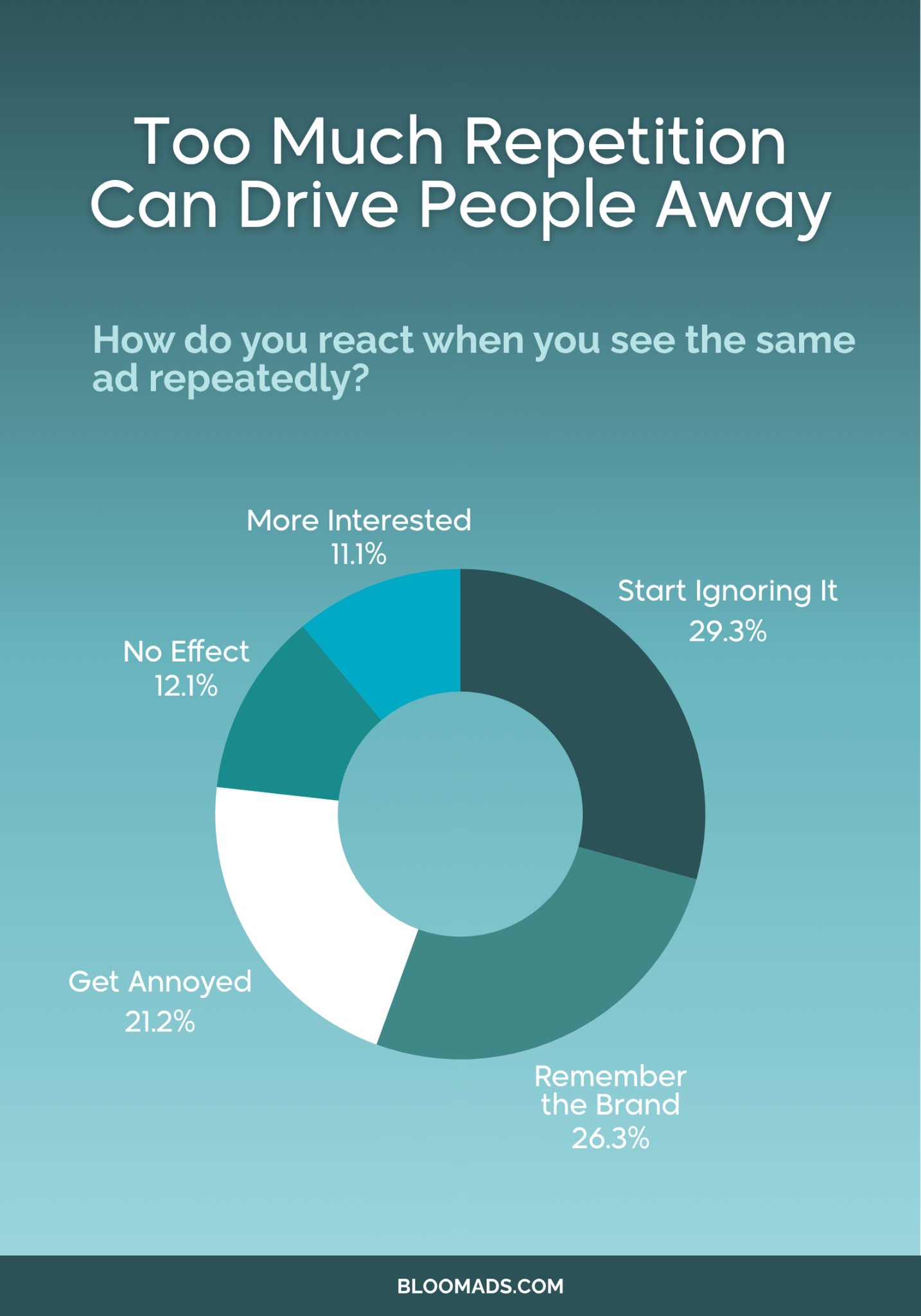
This creates an important distinction between frequency and fatigue.
Seeing an ad more than once can reinforce brand awareness, but repeatedly serving the exact same creative can eventually work against the campaign.
That is why advertisers need to monitor more than campaign frequency. They should also consider how long individual creative concepts have been running and whether engagement is declining.
Creative diversification is not only useful for ad algorithms. The survey suggests consumers respond to it, too.
53% of respondents said seeing different ads from the same brand makes them at least somewhat more likely to consider buying, including 11% who said it makes them significantly more likely.
By comparison, 35% said seeing different ads makes no difference, while 9% said it makes them less interested.
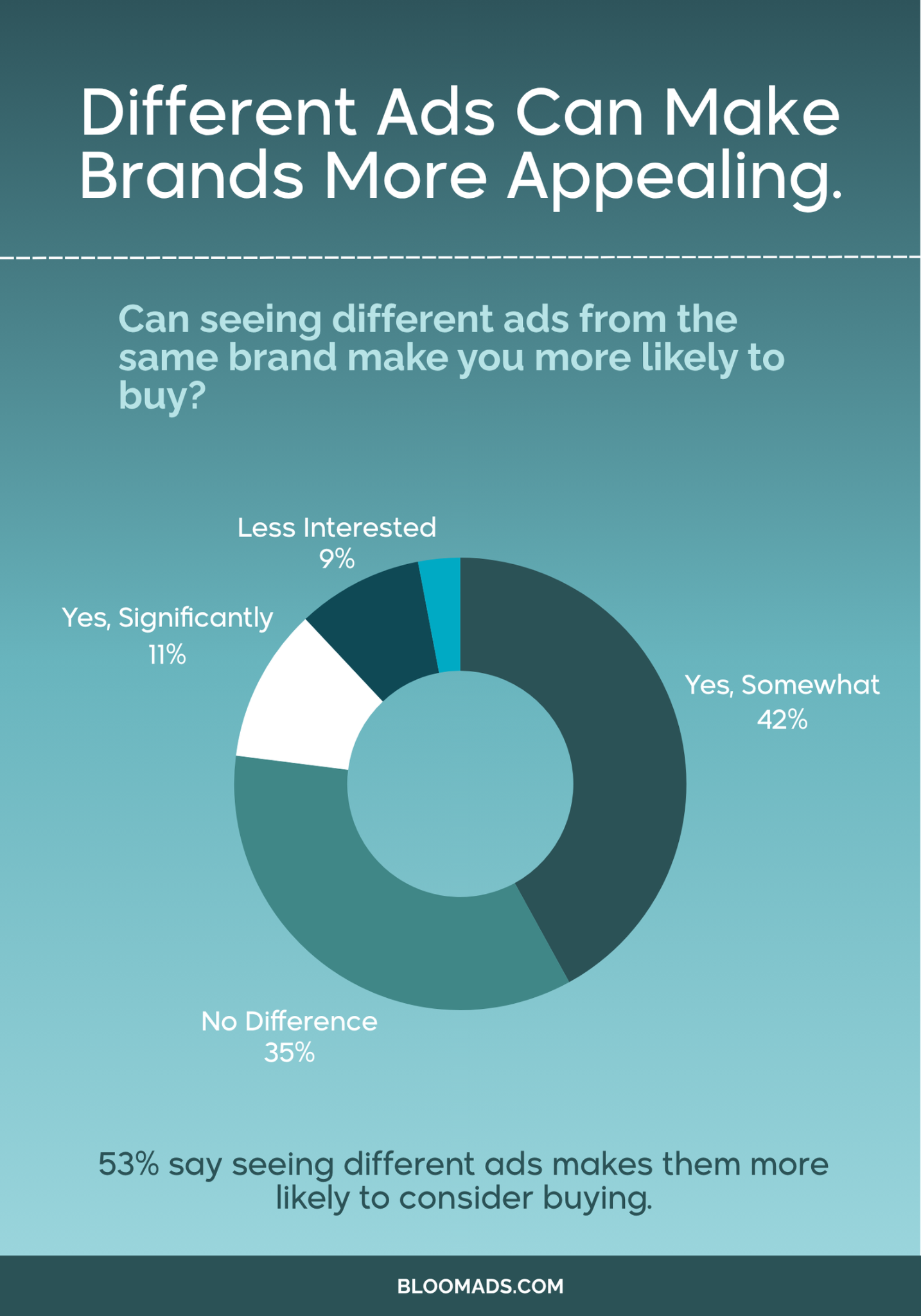
This reinforces why creative refreshes should involve more than changing a background color or swapping a headline.
Different ads can show different products, customer needs, benefits, situations, formats, people, objections, and reasons to buy.
The brand stays consistent. The creative entry point changes.
The survey suggests that consumers do not respond to one universally effective type of ad:
For advertisers, this means the goal should not be finding the one winning ad.
A stronger strategy is developing a portfolio of creative concepts that communicate the brand in genuinely different ways. Each one gives the advertising platform another opportunity to identify the users most likely to respond.
Traditionally, advertisers might have taken a few ads and tested them against numerous manually defined audiences.
Increasingly, the opposite approach can be valuable: give broader algorithmic targeting a deeper library of distinct creative and learn which concepts attract different users.
Creative performance can then inform the next round of production.
Instead of asking only, “Which ad won?” advertisers should also ask:
Modern paid social requires more than strong media buying and precise audience settings.
The ad itself is providing platforms with information about who responds to a particular message, image, format, problem, or benefit.
Bloom Ads’ survey reinforces the same idea from the consumer side: people respond differently depending on what they see, why they trust it, whether it addresses their needs, and how often they have already seen it.
The brands that give algorithms a wider variety of meaningful creative have more opportunities to make the right connection.
There probably is not one piece of creative that will resonate equally with every potential customer.
That is exactly the point.
Modern social advertising gives brands the ability to test different messages, formats, hooks, and customer motivations at scale. Instead of relying on increasingly narrow targeting to find the right person, advertisers can create more ways for the right person to recognize that an ad is meant for them.
Your audience is changing, and the way ad platforms find them is changing too. Bloom Ads helps brands build smarter paid social strategies with creative designed to capture attention, earn trust, and give algorithms more opportunities to find the right customers.
Ready to get more from your social media advertising? Contact Bloom Ads to build a creative strategy designed for how modern ad platforms actually work.